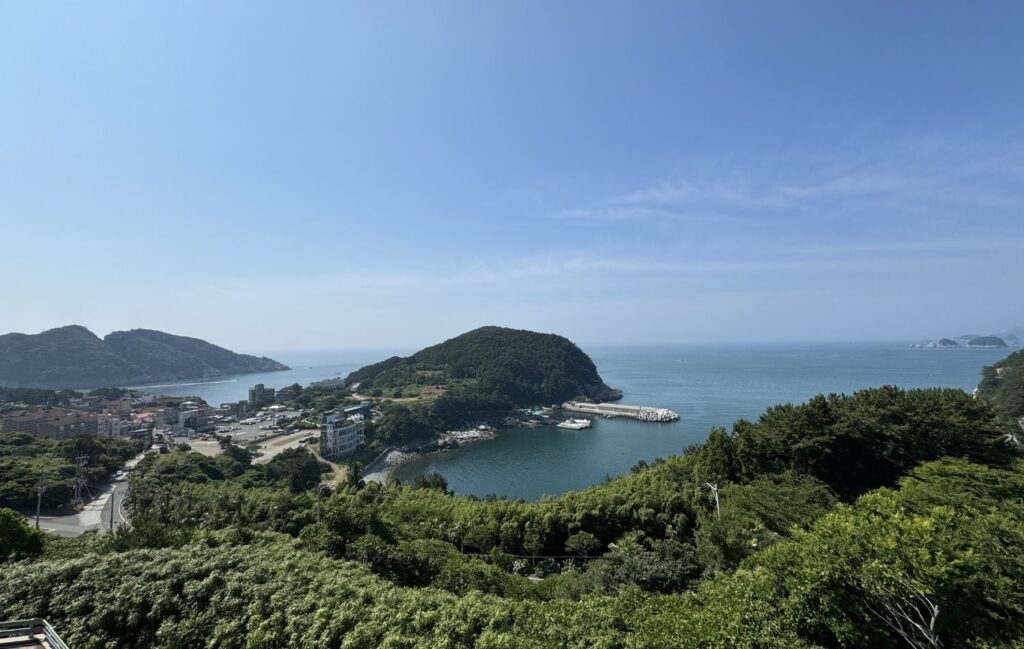
There is a particular kind of travel satisfaction that comes from visiting a place before it becomes famous. Geoje Island on Koreas southern coast is not entirely undiscovered locals from Busan have been coming here for decades and domestic tourism has steadily grown but it remains meaningfully less crowded less expensive and less packaged than Koreas most prominent island destination.
For international visitors or first-time Korean travelers who have not yet been to Geoje this guide provides a practical foundation: what the island offers how to get there where to stay and what to do during your time on the southern coast.
The Island in Brief
Geoje is the second-largest island in South Korea and sits at the southeastern tip of the peninsula connected to the mainland by two bridges. The larger of these the Geoga Bridge links Geoje directly to Busan across an eight-kilometer span over the bay a crossing that takes less than 15 minutes by car and provides views that constitute a minor attraction in their own right.
The island divides roughly into two zones. The northern half centered on the city of Gohyeon is urban and industrial home to some of the worlds largest shipbuilding facilities and most of the islands permanent population. The southern half is almost entirely natural: forested hills fishing villages rocky coastal formations and the chain of attractions that runs from Hakdong through Haegumgang to the islands eastern tip.
Most visitors are there for the south.
What to See: The Southern Coasts Main Attractions
Haegumgang
Haegumgang is the islands defining natural feature and the primary reason most visitors make the journey. The site is a two-kilometer stretch of volcanic rock formation on the islands southeastern coast where centuries of wave action have produced columns arches sea caves and narrow tidal channels of considerable visual power.
Boat tours from Galpo Port circle the formation in approximately 40 minutes and operate from around 9am to 5pm daily. The tours come close enough to the rock faces to convey their scale and geological character this is not a view adequately captured by photographs taken from the land. Weather permitting the tours run regardless of season though rough conditions occasionally cause cancellations.
The land-based approach a walking path above the formation provides elevated viewpoints that complement the boat tour perspective. The path takes about an hour to complete and requires no special fitness or equipment.
Wind Hill (Baramui Eondeok)
Located approximately ten minutes from Haegumgang by car Wind Hill is a broad open slope that channels the sea breeze directly across a wide expanse of grass canola or pampas depending on the season. It is a simple unpretentious site that consistently produces a feeling of openness and ease. The walking circuit takes 20 minutes. Entry is free.
Oedo Botania
Oedo is a private island garden eleven kilometers offshore reached by ferry from Hakdong or Wahyeon ports. Its owners spent four decades developing a rocky islet into a botanical garden of over 3000 species organized into themed sections with sea views from multiple terraces. The ferry crossing takes about 25 minutes; the garden warrants 90 minutes to two hours.
Hakdong Pebble Beach
Hakdongs beach is composed of smooth rounded pebbles rather than sand a less common coastal texture that produces a distinctive sound when waves draw back across it. The beach is calm relatively sheltered and suitable for swimming in summer though most visitors come simply to walk along the shore.
Geoje POW Camp
In Gohyeon the remains of the Korean War-era prisoner of war camp have been preserved as a museum. The facility held tens of thousands of prisoners at its peak and was the site of significant international incidents in 1952. The museum is well-presented and adds a layer of historical context to a visit that might otherwise focus entirely on the natural environment.
Accommodation: Finding the Right Place to Stay
The accommodation landscape near Haegumgang has evolved considerably over the past decade. While small guesthouses and family-run pensions still operate throughout the area the most sought-after properties are now private villa-style buildings standalone structures designed for exclusive occupancy by a single group with outdoor pools covered terraces and views oriented toward the sea.
For travelers researching verified accommodation options in the area tour.geoje.go.kr provides a government-verified listing of registered accommodation in the Geoje area including properties near Haegumgang.
Key considerations for booking accommodation near Haegumgang:
Peak season demand is high. Summer weekends from late June through August see maximum demand and private villa properties with sea views typically sell out four to six weeks in advance during this period. Public holidays particularly the Chuseok autumn holiday see similar pressure.
Shoulder season travel (April to May September to October) offers significantly better availability lower rates and weather that many visitors find more pleasant than the humid summer months.
Car access is essentially required. The hillside properties near Haegumgang are not served by public transport and the distances between the southern coasts main attractions make rental car the only practical transport option for guests staying in the area.
Pool supplements are common. Most private villa accommodations charge an additional fee for heated pool use typically between 70000 and 100000 won per stay depending on the season and property type. This should be confirmed at booking.
Food: What and Where to Eat
The southern coasts food culture is straightforwardly seafood-centered. The restaurants near Galpo harbor and along the road toward Haegumgang serve what the local fishing industry brings in prepared in the ways that local people have been eating for generations. There is minimal concession to international tastes and this is a feature not a limitation.
- Hoe (raw fish Korean style):
- The Korean preparation differs from Japanese sashimi primarily in its accompaniments a wider spread of fermented and fresh garnishes that can be combined in varying ways. Local flatfish flounder and sea bream are the most commonly served varieties.
- Godeungeo (grilled mackerel):
- Straightforward but reliably good at most restaurants in the area. A useful benchmark for evaluating a kitchens overall quality.
- Haemultang (mixed seafood stew):
- Best in autumn and winter when the shellfish and fish are at their most flavorful. Rich and warming with a chili broth that the rice at the end of the meal is designed to absorb.
- Daeha (large shrimp):
- Available grilled or steamed typically from late summer through early autumn. The shrimp from these waters are substantial in size and clean in flavor.
Lunch at harbor restaurants requires no reservation on weekdays. Weekend dinner during summer benefits from arriving before 6pm or calling ahead.
Practical Travel Information
- Getting to Geoje from Busan:
- By car via the Geoga Bridge: approximately 50 to 60 minutes from central Busan to Gohyeon plus 40 minutes from Gohyeon to the Haegumgang area.
By bus: Direct services from Busan Seobu Bus Terminal to Gohyeon run approximately every 30 minutes throughout the day. Journey time is about one hour.
- By car via the Geoga Bridge: approximately 50 to 60 minutes from central Busan to Gohyeon plus 40 minutes from Gohyeon to the Haegumgang area.
- Getting to Geoje from Seoul:
- Most practical route is to fly to Gimhae International Airport (Busan) and proceed by car or bus to Geoje. Total travel time from central Seoul is approximately 3.5 to 4 hours including domestic flight.
- Getting around the island:
- Rental car is strongly recommended for anyone spending a day or more on the southern coast. Agencies operate near Gohyeon Terminal and the islands roads are generally well-maintained. A valid international driving permit is required for non-Korean visitors renting vehicles.
- Money:
- Most restaurants and accommodations on the southern coast accept card payment. Cash is useful for smaller vendors at the harbor and for transport. ATMs are available in Gohyeon and at a few locations near Hakdong.
- Language:
- English signage exists at major attractions but is limited in smaller villages and most restaurants. Basic food vocabulary and the ability to point at things on a menu is sufficient for most dining situations. Navigation apps with Korean language capability are helpful for driving.
A Suggested Itinerary: Two Days on the Southern Coast
- Day One
- Morning: Arrive in the Haegumgang area and check in to accommodation. Take the 10am or 11am boat tour from Galpo Port.
Midday: Lunch at a harbor restaurant in Galpo raw fish or grilled mackerel.
Afternoon: Walk the coastal path above Haegumgang. Continue to Wind Hill for the late afternoon.
Evening: Return to accommodation. Private terrace dinner at the property or at a nearby restaurant.
- Morning: Arrive in the Haegumgang area and check in to accommodation. Take the 10am or 11am boat tour from Galpo Port.
- Day Two
- Morning: Early ferry to Oedo Botania from Hakdong (first departure typically around 8am in peak season).
Midday: Return from Oedo lunch in Hakdong.
Afternoon: Walk Hakdong Pebble Beach. Drive north toward Gohyeon stopping at the POW Camp museum.
Evening: Dinner in Gohyeon before departure or second night on the island.
- Morning: Early ferry to Oedo Botania from Hakdong (first departure typically around 8am in peak season).
Final Observations
Geoje Island rewards travelers who approach it without fixed expectations. Its appeal is not reducible to a list of sights it emerges from the cumulative experience of the place: the geological character of its coastline the directness of its food culture the quality of rest available in a private villa positioned with sea views and complete quiet.
The island is close enough to Busan to be treated as a short trip but it is better experienced as a proper stay at minimum one night ideally two. The difference between a day visit and an overnight stay is the difference between seeing a place and spending time in it.
For those who have not yet been: Geoje is worth the journey.

I discovered your blog site on google and check a few of your early posts. Continue to keep up the very good operate. I just additional up your RSS feed to my MSN News Reader. Seeking forward to reading more from you later on!…